Leslie Odom Jr. · Original Broadway Cast of Hamilton
Verse of the day: “take my yoke upon you, and learn from me, for I am gentle and lowly in heart, and you will find rest for your souls.”
Matthew 11:29
Rest. Something the entire world seems to put on the back burner of importance when thinking about their day. Especially in the United States, where productivity for the sake of economic gain and worth is prioritized. Where many of us feel guilty and ashamed if we do not produce or work on something in the span of 24 hours. Where we have to save up vacation days, or have no vacation days. Honestly, I believe that most of America doesn’t know what a true vacation or break or holiday is. It feels cut throat, especially with the ability to carry our work with us anywhere with a wifi connection.
So what happens when you can’t work? When you have to take a break? When you need REST?
This is the dilemma of about 1/3 of Americans who have a disability, mental or physical chronic illness. We cannot prioritize work or productivity. You would think “fake it til you make it” mantra would work for us; it doesn’t. It becomes fake it until you flare so badly you are either forced to rest, have a huge flare up of symptoms, or end up in the hospital. (and now have to hope insurance will cover that hospital stay or have some sort of income ready from all that over working to pay for it).
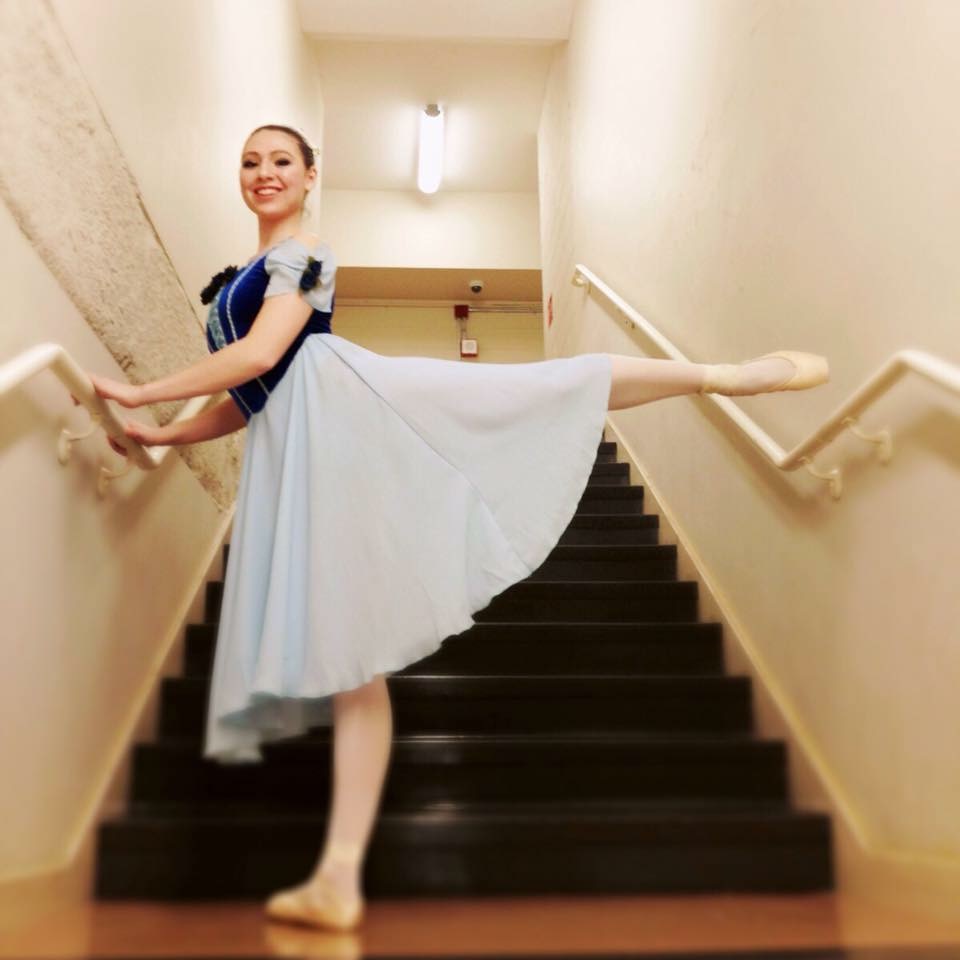
Rest has always been a hard concept for me to wrap my head around when it comes to being complex autoimmune. Even before my diseases have progressed to palliative care like they are now, I never prioritized rest. I used to be a ballerina, and it was taught that you can always strive for better, be better, do better. It was one more time ten more times only to stand on the side and rehearse even more until class or rehearsal is over. Perfecting any flaws by breaking down movement piece by piece over and over and over again. You never truly take a break from ballet. Until it breaks you.
The same applies to any chronic illness. You never truly get a break from being chronically ill. Sure, there are many treatments that may slow disease progress, minimize symptoms, and sometimes put you in remission. But treatment can only go so far currently. And even with the idea of personalized medication – we are still so far from this. So what do we need to do?
Rest.
Breathe
Take one day at a time. One hour at a time. One minute. One second.
Your health is not worth the societal pressure to constantly be working.
The body can only handle so much.
So, to everyone reading this: find a time in your day to rest. Truly rest. Take a break from the work and any other thoughts of things to do or need to be done. Schedule 5-10 minutes of your day for a break. Take time to nourish your body. Especially if you are chronically ill. Sleep. Take a nap. Take what you need. Cherish yourself enough to WANT to take care of it. You only have one life and one body. There is a time for everything, and that includes rest from the world.
Verse of the day: […] and who knows whether you have not come to the kingdom for such a time as this”
Esther 4:14
If it is not already known, I am a Christian. Meaning I have a personal relationship with God, Jesus is my Lord and savoir, and I have the Holy Spirit living in me. I don’t like to say I am one group of Christianity or another, as I know that regardless Christianity is a relationship between yourself and God. The Bible is the word and the word is Jesus.
This morning I was reading out of the book of Esther. Many people know the story of Esther vaguely Christian or not. But for those who do not – here’s my quick summary:
There is a King Ahasuerus who rules over this huge Persian area decides that he wants to throw a celebration lasting half a year. At the end of the celebrations he commands the Queen Vashti to come to be shown off to the province leaders. She refuses and King Ahasuerus throws a hissy fit – then his court advises that he de-thrown Queen Vashti and find a virgin, “someone better” to be the queen. The king, in his anger, listens to his advisory along with decreeing that all men are the masters of their own households.
The King also declares that all provinces send their most beautiful virgins so that he may choose a new queen. Enter Esther here and the uncle who raised her Mordecai; both of whom are Jewish. Mordecai tells Esther to hide the fact that she is Jewish for her own safety. She is chosen to be the next queen because the King likes her so much. Mordecai stays out of the Kingdom gates and is able to save the King overhearing a coup by the men of the court; message delivered via Esther.
Fast forward, Harman – one of the king’s close advisers – wants to hang Mordecai. They will not bow before the king and his royal subjects. He wants to hang Mordecai and has a decree that all Jewish people be slaughtered. Esther risks her life and tells the King she is Jewish and asks for an appeal to the law. The King is appalled by Harman’s doing but cannot revoke his decree because of some weird law back then; but he could decree another law that the Jewish people may fight back the genocide/purge Harman’s law. This ends up saving the Jewish people in all of the provinces.
Now, I left out a lot here and there’s definitely me condensing the story. If you want to read the full story it is only nine short chapters in the old testament. So why is this story important?
I feel as though a lot of people take this story to say “be like Esther” but that is not the case. People in the bible are not there to make us want to be like them, they are there to point to Jesus and God. Something Jesus is trying to say here is that even in extreme circumstance, there is only one true God, follow him and stand strong in your faith in him. Maybe you were placed where you are now for a moment like this.
So reading this and seeing the bravery, faith, and high stakes of dying, I can’t help but be reminded that even in the worst of times, God can use you. Jesus will never lead you wrong and is sovereign over all things. The tricky part is having that “faith of a mustard seed” type of trust in him.
This is where I struggle sometimes, because I have personally been afflicted with a mast cell disease. Insurance finally denied my stem cell transplant a couple weeks back. I am now sending off letters to appeal to them; I will likely start getting sicker and dying soon if I don’t get this covered. Knowing this, in the iconic words of Esther:
[…] If I perish, I perish
Esther 4:16
I have contentment in my heart about the appeal to insurance, but that doesn’t mean I am not scared during this process. I would be the first for mast cell activation to get a stem cell transplant. There are a handful of people that would benefit or even have their life saved if I am able to be the “lab rat” so to speak and survive this. Given I honestly should be dead right now (heart failure, chronic kidney disease, RA/lupus-like/auto-inflamatory/immune arthritis, adrenal failure, anaphylaxis more times than one can count, lung failure, high blood pressure, beating sepsis twice, bone marrow failure and mast cell disease to name a few). The hospital is almost like my second home. I can’t eat without risking the use of an epipen. I need a new immune system. I am not finished yet. I relate to this verse so differently now.
If I perish, I perish.
but also; maybe I was placed here for such a time as this. I get the stem cell somehow, and it not only saves my life; but others who suffer severely. I can proudly and boldly state that my healing is from the Lord. And if I die, my story still preaches and glorifies God’s name for what can be learned from my illness. This is my testimony.
I am currently in an insurance battle for an approval for my rare disease to be treated via a stem cell transplant. I am chronically ill with many different diseases, all of which can be connected as comorbidities.
Now what do I mean when I say comorbidities? A quick google search will give you the definition:
“the simultaneous presence of two or more diseases or medical conditions in a patient.”
But what does that actually mean? Well we know that there are many different systems in the body. Over time we have named these different systems individually such as our nervous system, the gastrointestinal tract, endocrinology system, musculoskeletal system, cardiovascular system, etc. This is why there are so many sub-specialties in the practice of medicine.
Say you have a headache or chronic migraines, you would want to see some sort of head specialist like a neurologist. Or if you break a bone you would want to see the orthopedist (bone doctor) or a surgeon who works on bones. Having trouble with digestion? You would want to find a gastrointestinal doctor or a nephrologist. Heart or blood pressure problems? A cardiologist would likely be your first stop to modern medicine help.
So as a society we have pulled apart the human body into these sub-specialty groups in order to better focus on a specific problem or issue that the patient is having. This system has worked well for the majority of the population for thousands of years. Because the majority of the population has a very easy time being placed and sorted into set boxes.
Many people accredit Aristotle to be one of the first scientists of the world. And I disagree with this statement personally. Here’s why: he was a great organizer, he was a great categorize-r. He put like things with like things. Where is the science in that? All he did was classify groups of things.1
Do not misunderstand me here though; as the classifications of everything Aristotle put together was an enormous feat for the time as his work spanned all human knowledge today. I am simply saying; classification and categorization don’t mean much when we live in a world that does not fit into one box. Especially with the practice of medicine. There is no exact science in medicine.
I boldly say that there is no exact science in medicine. This frustrates and ruminates in our heads. As patients, as medical students, as doctors, as insurance company agents, as simply being human. It is called practicing the art of medicine. If medicine was an exact science and each category we have placed our body parts into worked individually and independently from one another, then maybe we could call it a direct science? Yet we all know that to be an untrue statement.
For example: the brain uses glucose as a source of energy. In order for the brain to have glucose to use as energy, you have to eat food – the glucose. This connects the gastrointestinal tract with your head. This type of headache is cured by eating or drinking food.
Now, comorbidities with disease kind of work like this. Because the entire body does NOT exist in nice little separate boxes, but constantly intertwining in ways that we are still learning and discovering about.
Here’s a great video on my disease that can go further into detail of what I mean on this:
So as in hopes to have a better picture, Dr. Saperstein, world renown expert in the field of Ehlers Danlos Syndrome, breaks apart the pieces of a patient that has this condition. As we can see; the root cause is thought to be a defect in collagen production. That default in collagen affects more than one system in the body. Often multiple systems are affected but not connected right away because of our categorization system. Comorbidities do not fit into one box, and may seem totally disconnected from one another.
So tying this all together with me: I am a rare disease Ehlers Danlos Syndrome patient. I have nearly every comorbidity there could be for this condition. One extreme comorbidity that has disabled and destroyed my life is the condition of Mast Cell Activation Syndrome. For me, this has been so life threatening I have used countless epipens, been in multi system organ failure, and almost lost my life daily depending on what I put into my body. We have tried so many treatments at this point, and seeing world renown hematologist and oncologist and allergist to try and control my disease.
Hence the treatment of stem cell transplant being on the horizon, and me currently fighting insurance for an appeal to give me one. This is extreme treatment for a comorbidity of a disease we still know so little about, making it difficult for someone to want to cover such a “risky” procedure. I would be the first for mast cell activation.
So until we get this appeal I will be blogging life again. The ups and downs of my rare diseases, and explaining more about comorbidities of the different body systems.
Because this is worth fighting for. This is worth the research and education. If nothing else may my medical journey help prevent the severity or find a cure to all the comorbidities us rare zebras live with every single day.
Talked to the local heme/onc following my case here, and even though he referred me to one of the best experts on my weird disease in the nation, he freaked out. He’s scared that I am way too fragile for the transplant having, if you believe it, anaphylaxis almost weekly again. I can’t eat, I barely tolerate TPN, and some days I have to survive off of IV saline alone. But here’s the deal and why I am in love with hematology and oncology in medicine, these doctors are willing to take the risk.
risk benefit ratio for a 24 year old getting an allogenic stem cell transplant seems like a very weird question to ask; yet in my situation it actually makes sense.
Risk:
treat and die from complications
refuse to treat and die
try other treatments but none work and die
Benefit:
treat and get my life back
treat with other chemos and go in and out of remission
Basically, if you have not noticed I fit into the we need to treat or I am going to die category here. It has been FAR too long to be this pancytopenic, and to be getting far worse than better since chemo. My bone marrow is functioning at <10% according to Mayo Rochester. I have bone marrow failure, but likely not from 2-CdA I ended about 7 months ago now.
Yet, though there is local heme/onc push back, he has referred my case to another local heme/onc, and then someone at M.D.Anderson. I also have a team being put together at the NIH now because of family connections. I am having the best of the best looking at my case, and I have no idea what they are going to advise.
I just have that gut feeling once it is realized that I have been suffering for so long and what I have is aggressive because I have had it so young, an allogenic stem cell transplant that could cure me is something I am willing to do and fight through.
I didn’t ask for one by any means. If there was any other choice to cure me or give me a quality of life worth living I would take it in a heart beat. But every day I continue to get sicker and sicker. I actually am dying.
So that’s the stem cell diaries tea for now. Updates as I learn more.
a guide to help take the stress away from doctors appointments and allow for optimal care
Whether you are chronically ill and practically a professional patient, or simply see your PCP every so often or specialist for that one health issue; preparing to get the most out of your appointment can be daunting. Often enough, patients usually find themselves leaving appointments with more forgotten questions than answers to what they truly need. Here are some of my personal tips to mitigate that.
Pre-appointment preparation
verify time and date of your appointment – some doctors will want you there 15-30 minutes before the appointment actually is. Typically this is to fill out paperwork and account for the doctors running behind schedule. I always personally aim to be able 10-15 minutes early unless asked to come earlier or specifically on time.
Account for traffic/transportation at the time of day of your appointment – is your appointment at 8:00 am in the morning? Is it close or do you have to battle traffic to get there? Is it during rush hour? How are you getting there? All questions you should answer before either scheduling the appointment or the day before the appointment.
Expect to fill out generalized paperwork. – this typically includes insurance information, a review of systems, your PCP information if seeing a specialist, main complaints/why you are at the appointment in the first place, pharmacy information, current medication list, and current symptoms. Make sure you have all of this information on hand and ready.
Water – always bring water, regardless of where you are going
a notebook, pen/pencil, and any current labs if the specific doctor has not seen them, did not order them, and the labs are related to the specialty. The notebook and pen are to record important information, have questions written down to ask, and general updates for the practitioner pertaining your condition.
Top three issues – this ensures that you stay on track with your practitioner, and that you remember to ask and get answers for all your symptoms and questions. This focuses the appointment overall.
a mask, especially if immunocompromised
During the appointment
start with health updates – this could be improvements, drugs that are helping, overall feelings, things that have not been working, concerns.
be HONEST – if things are getting worse or you have a concern, EXPRESS THIS. “I’m okay” or “I’m fine” are NOT good enough answers if you are having symptoms and things that are problematic.
focus the appointment on your top three list – start with the most pressing issue, this should be the number one reason you are there.
advocate advocate ADVOCATE – you are the ONLY person that knows what your body feels like. You are the expert on your own body. If something feels very wrong, PRESS ON THIS ISSUE.
take notes on any med changes, medical advice, or new diagnosis – hence forth bringing a journal.
if possible make sure to get a visit summary and doctors notes – this should go into a binder of visit summaries, or doctors notes, so that you can refer to them if need be in the future.
ask questions – doctors speak medicine and have to translate to what they call “living room language” for the general population. This isn’t because the general population is dumb or stupid or beneath the level of intellect of a doctor. It is because we haven’t dedicated years of our lives to learning this language and then practicing it. So if something is not understood, ask them to explain again differently. ASK questions about the diagnosis, the medications, the prognosis. You are literally paying this person to give you the best medical advice possible, this includes explaining said advice and answering questions about it in a way YOU understand.
If you have done research into something you think you might have, don’t be afraid to ask about it – a lot of diseases, especially autoimmune, take a long time to diagnosis. We are talking 6+ years on average. If the doctor refuses to look into it and you still feel strongly that there is something there, call them out on it. How? ask them to state in his/her note that they are choosing not to look into the possibility of a certain illness or run a certain panel of tests. More often than not they will change their mind quickly and just run the test.
At the end of the appointment – so long as the doctor isn’t a total jerk to you but even so, thank them for their time. Thank them for seeing you.
Post appointment
Review the visit summary and doctors notes on your appointment
Medic alerts have helped revolutionize care in society by creating the ability to quickly identify conditions to medical professionals when the patient is unable to deliver this information on his or her own. Whether this be a medication warning to the practitioners about being on a blood thinner for a DVT, multiple food and drug allergies, an autoimmune condition, medical record number, name date and birth; and so much more, allowing fewer mistakes to be made and better healthcare overall. People wear medical alerts and id bracelets for all kinds of reasons, typically all very valid. Yet, I am finding more and more products being made that have no resemblance to a medic alert bracelet at all. In fact, the bracelets or jewelry looks less like something with lifesaving information and more so something out of the local jewelry store. The information and medic alert sigma may all still be there but gone completely unnoticed.
I would like to start discussing this topic in light of the idea that I am attacking no one. No one is being called out here for having a pretty, disguisable, medic alert bracelet. Heck, I even had a couple before I realized that in an emergency situation, it would likely have been missed. The longer I have lived with Addison’s disease, a mast cell disorder, and autoimmune conditions the more my opinion of what a medic alert bracelet SHOULD look like.
Medic alert bracelets and necklaces are made to be seen, not hidden, because of conditions you yourself may not be able to explain in an emergency. They typically should have the following:
NAME DOB
CONDITION
EMERGENCY MED +/-LOCATION ALLERGY
ICE #
At a minimum. So, for me personally, I have a medic alert for both my Addison’s disease and the multiple adrenal crisis I have had, along with information on mast cell disease as I often have reoccurring anaphylaxis and need my epipen.
The last thing I want is to be found not breathing and for the medics to be unaware that I am prone to anaphylactic shock and need an epipen to open my airway.
I do not want to be found seizing or in a coma because of an adrenal crisis and no one is able to administer my emergency hydrocortisone shot.
My conditions are so acutely life-threatening that one wrong mast cell trigger could set off an anaphylactic attack out of nowhere. Or suddenly I could have an adrenal crisis because I am in adrenal failure and faint and have my body shut down because I ran too low on cortisol.
Conditions such as these, especially if they happen often enough, are not worth the pretty bracelet or medic alert as a fashion statement.
I say fashion statement because in the past 5 years I have used more epipens than your heart should be able to handle to stay alive. I have woken up to an ED doctor with a face of relief but pain and fear in his eyes still as he had administered 250 mg of solumedrol to treat an adrenal crisis before I could explain the condition to him. I have heard the words “that was such a close call there” more times than I think any 23-year-old should have to endure.
If you have ever had to use an epipen you would know it’s not a fashion statement, but a burden to carry around. If you have ever experienced even one life threatening episode where you were completely incapacitated to administer a life saving medication and survived, you can begin to understand what I mean.
Ergo with all of this in mind, my personal opinion of medic alerts is one that many people in the chronic illness community may think I am being extreme about in posting, yet it HAS TO BE SAID: medic alerts are NOT fashion statements for conditions that are acutely life threatening. EMERGENCY MEDS should not be in a bag that can be missed or overlooked by a medic. Your life is worth so so so much more than that. And it scares me to think that many people overlook this idea.
I used to read a lot as a kid, and I start off by saying “a lot” as in I would read practically anything. Mostly books for sure, I was blessed by my older brother’s occupational therapist and mother’s strict rules of PBS educational shows ONLY, to be reading and understanding at a 5th grade level by the age of 4. Books, the ingredients in the shampoo bottle, instruction manuals, billboard signs, random comics, magazine articles, recipes to my favorite Christmas desserts, and the occasional news paper article or two. I would fly through book series, I think even at one point I read the entire Harry Potter series in less than a week. What I mean to say by this; reading is, was, and will forever be an integral part of my life.
Yet, as we all know, getting older sometimes makes us bookworms disconnect from reading for pleasure to reading as a balancing act in our lives. By high-school I was training 40+ hours a week at a professional ballet school, hopes and dreams of becoming a ballerina and leaving Arizona for bigger, grander stages. Those 40+ hours of dancing on my toes, only to increase when getting into the Joffrey Ballet School at age 16, quickly replaced any time that I had for leisurely reading. Reading books became a task to be checked off, a line on what appeared to be a never ending “to-do” list of homework from the college prep high school I went to. My reading slowly dwindled, what once was my only escape from reality as a child turned into yet another chore to move forward in society. The truth in that statement hurts my heart as I type it out now. I feel as though there are a lot of formally “gifted” kids out there that understand what I mean though.
Fast forward from 16 to now 23, I have found myself in the unique position where I can actually sit down and pick up a book again. Now, this circumstance was never part of my plan or idea of what I would be doing at age 23 by any means. Ask me at 16, would say by 23 I would be in a ballet company dancing all day every day. Ask me at age 18, I would probably start sobbing, as this was a very, for lack of a more appropriate term, crappy and shitty year for me. I had to give up dancing ballet professionally and was headed off to college. To study what? I had no idea. Former gifted child with an aptitude for just about anything I could read and learn, I started college as an English and Chemistry double major. I loved to read, and had recently lost my normal escape from reality dancing so I figured being an English major would give me a sense of comfort and normalcy as I transitioned from the ballet world back to the real world so to speak. I quickly learned that though I LOVED to read and write and consume book knowledge, readings for my English major specific classes felt a lot like the chore reading I had to do in high school just to graduate early. There was little sense of love and comfort in the selected readings of my two English classes that semester. I was utterly bored and sometimes vaguely disappointed in the selection of readings and the assignments that accompanied them.
So yet again I implore us to fast forward to now, June 2021. I have begun chemotherapy for my systemic mast cell disease, and during the treatment and all its cycles for the first time in a VERY long time, I have the mental capacity and space to read a book. Multiple books if I so pleased, as my only “job” right now during treatment is healing. Henceforth I have put together the idea of a “chemo TBR list” (TBR- to be read), documenting and reviewing all the books I have collected as my comforts over the years, and actually putting a dent into the massive list and pile that I have wanted to read for so long. As rough as chemo is, this has become something I can do in the “spare time” (more like feeling sick unable to move screens give me headaches and I otherwise would be sleeping) this form of treatment comes with.
So if anyone is interested, you can join me on the books I will be reading during my chemo season, reviewing, and potentially giving away as I de-clutter my shelves in my room. There will be a list posted here on the blog and plan on doing a mini video series on my tiktok @cortisol.queen and Instagram stories @cortisol.queen as well for the handle. Let me know if you all have any suggestions! I am also totally open for writing some reviews on this blog and making one book a month a book club read, where we can all read together.
So stay tuned! I plan on posting about the books I have read over the past two weeks here very soon, along with a list of titles I intend upon reading!
Join me in my reading through my treatments! Here you will find a master list of the books I am enjoying, along with reviews, read or not read, and a suggestion box for my next reads or books to be added.
“Tell the story of the mountain you climbed. Your words could become a page in someone else’s survival guide”
Morgan Harper Nichols
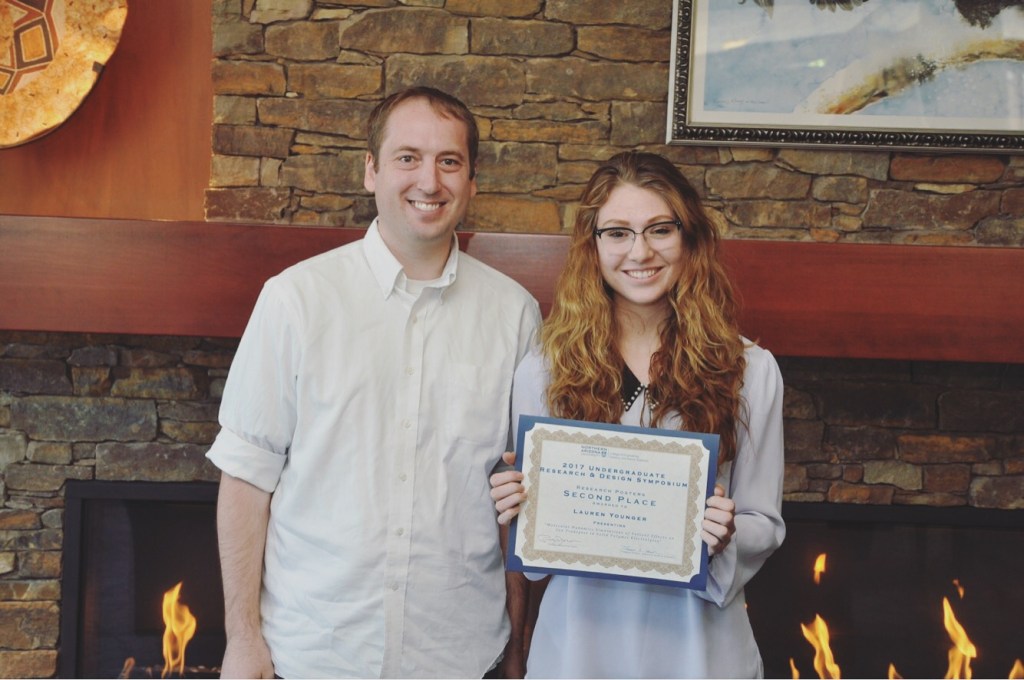
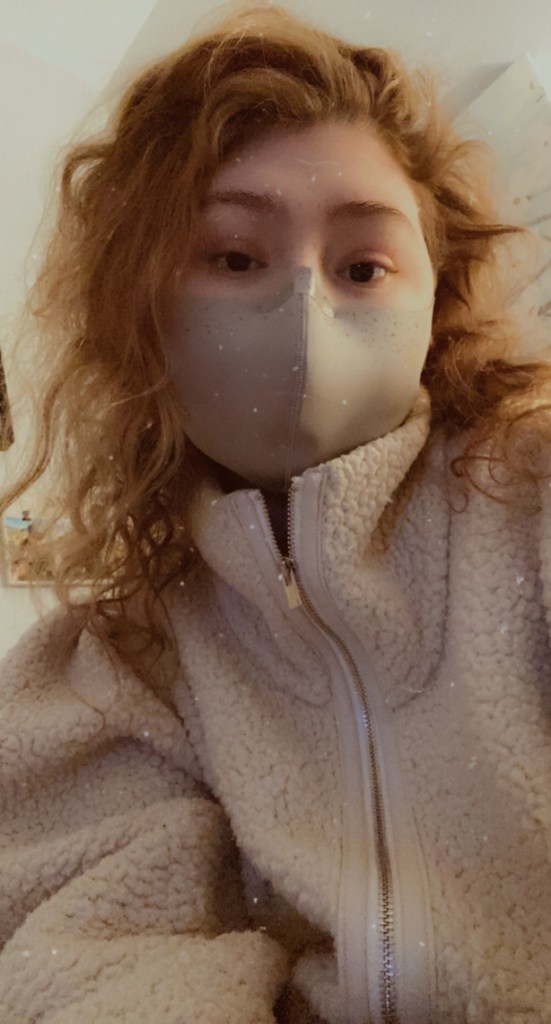
Hello readers, my name is Lauren Michelle. I’m a 23-year-old former ballerina, sometimes Chemistry major, and full-time medical zebra. And this is my blog for all things about being chronically ill as a young adult. I started showing signs of medical problems as a teenager, but had chronic illness take over my life as an 18-year-old during my first semester of college.
Dancing underground in NYC
Nutcracker Waltz
UGRADs
Chronic Illness
I have wanted to share my story and journey about being chronically ill for a while now, but I would be lying to say this task of starting a blog has been an easy feat. The difficulty has never come from inability to articulate what has happened in my life. If nothing else, I sometimes have the problem of oversharing. More so, I wasn’t sure if what I had to say on the subject would be received in an informative yet personal way. I have a lot of rare diseases that even doctors sometimes never see. What could I possibly share about this that my friends, family, peers, old co-workers and possible strangers find worth 15 minutes of their day to read?
I am a “medical zebra”
What exactly is a medical zebra though?
The term comes from the idea that when making a medical diagnosis, 9.99 out of 10 times if you hear hooves, the diagnosis is a horse. I’m that 0.01 out of 10 times that hooves actually mean a zebra. I have stuff going on in my body that a doctor may see once in his or her career, if ever. Most of the time I go to the ER the physician has to google my own condition. I actually have to tell the physician what works best for my body in some scenarios. It took us a long time to track this down as well. I’ve been misdiagnosed, written off, had almost every test done, re-diagnosed, and still baffle some specialists and professionals with my diseases. Which is why I have come to realize that I need to talk about this.
I stumbled upon the Morgan Harper Nichols quote at the beginning of this blog post while writing down doctor’s appointments in my monthly planner. (Yes, I am also that nerd who lives in her planner. Just because I am chronically ill does not mean I lost my type A personality.) The quote truly jumped off the page for me.
“Tell the story of the mountain you climbed. Your words could become a page in someone else’s survival guide”
Morgan Harper Nichols
Could my climb be a survival guide?
I wish I had a survival guide on becoming chronically ill as a young adult. Since I became chronically ill my life has been full of never-ending questions. When do I need to see a doctor? Is this a new chronic symptom or am I “normal person” sick? Can I do my classes with this? How do you register for disability resources? When do I use an EpiPen? Do I need to tell people I am chronically ill? What’s a medic alert bracelet? Do I need one? This medication is supposed to help with what? Will I ever get better? How much Benadryl are you supposed to take in a day? Is this pain normal? What specialist do I need to see next?
Spoiler alert, there may be obvious answers to some of these questions, but many are still open ended. There is no “one-size fits all” survival guide to being chronically ill as a young adult. But you can learn from other people who have gone through similar things. The mountains I have climbed I mostly have navigated on my own. It’s terrifying, full of a lot of twists and turns, and never linear. If nothing else I am an advocate for rare disease, and another voice to hear for those struggling to grapple with their own chronic illness.
It’s been 5 years of chronically ill Lauren Michelle at this point, and I am finally ready to talk about it.





 I am a “medical zebra”
 The Sleepy Chemist